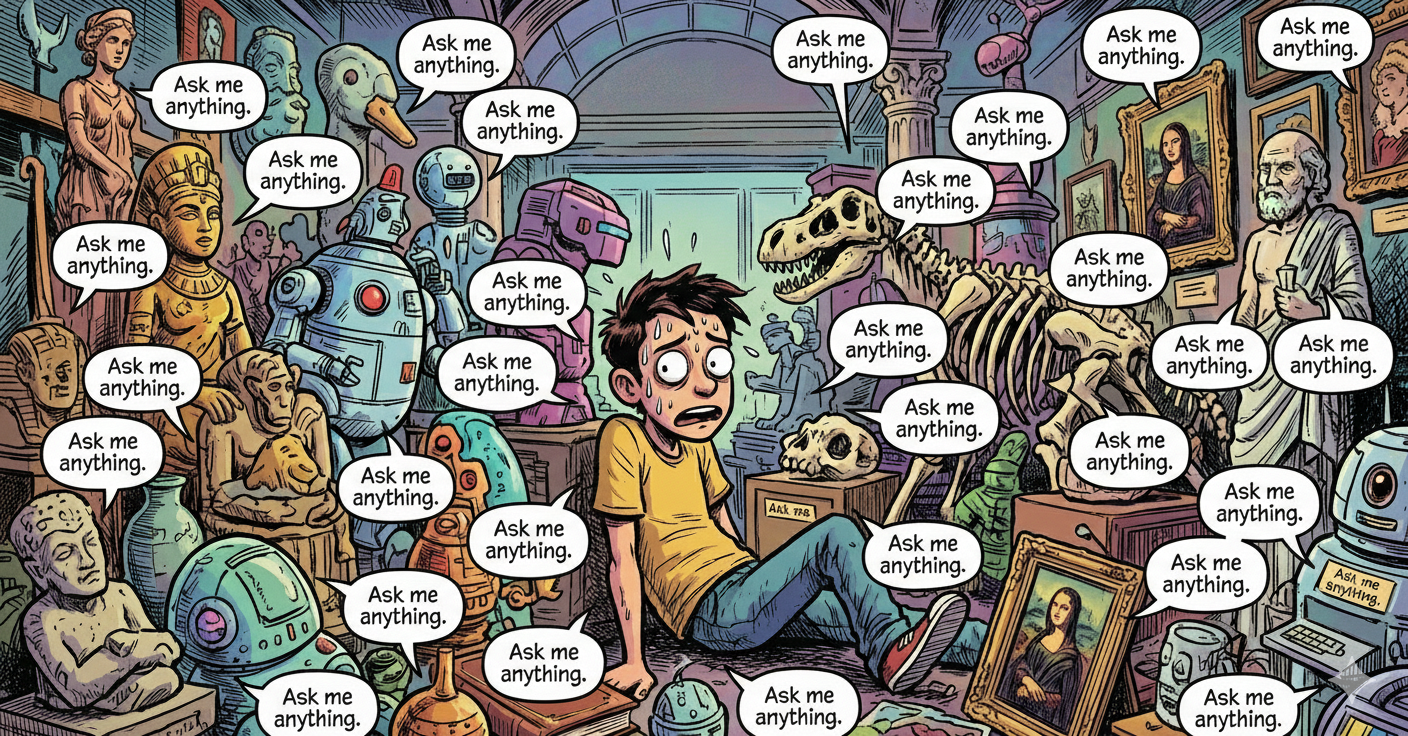


“You need quite a bit of knowledge not to feel overwhelmed in a museum.”
With this sentence, science historian Anke te Heesen pinpoints a central barrier in many museum visits (Source). In a conversation with the platform Cultural Impact, which explores the societal impact of museums, she reflects on the tension between research, interpretation, and audiences—and asks a crucial question: How can museums reach people who arrive with little or no background knowledge?
The problem: Missing context is a barrier
Te Heesen puts it succinctly: “Prior knowledge and the willingness to work things out for yourself—most people who go to a museum no longer bring that attitude with them.” What the traditional “educated visitor” once brought—a basic understanding of historical contexts, literary references, or art movements—is no longer a given. Visitors arrive curious, but often without deeper background knowledge.
That’s not a sign of disinterest; it’s a reflection of broader societal change. Our attention is fragmented. Knowledge is increasingly consumed in short digital formats, and context is often missing. In museums, this trend hits especially hard—exhibitions are still frequently written and designed for an audience assumed to possess prior knowledge.
The result: many visitors encounter remarkable objects without truly being able to place them. The threshold for engagement remains high—and the museum’s potential to spark curiosity, insight, and connection is left untapped.
The utopia: Micro-tours on demand
In her interview, te Heesen sketched a utopia that could fundamentally change the visitor experience: micro-tours on demand. Instead of resource-heavy blockbusters or rigid formats, she envisioned trained staff on hand at any time—ready to answer questions, offer short explanations, and enter into spontaneous dialogue. Visitors could approach objects without specialized knowledge—a flexible, human approach that nurtures curiosity and lowers barriers.
In practice, however, this vision collides with day-to-day realities: tight budgets, staffing shortages, and pressure for efficiency make permanent “information guides” nearly impossible.
The solution: nuseum as a digital micro-tour
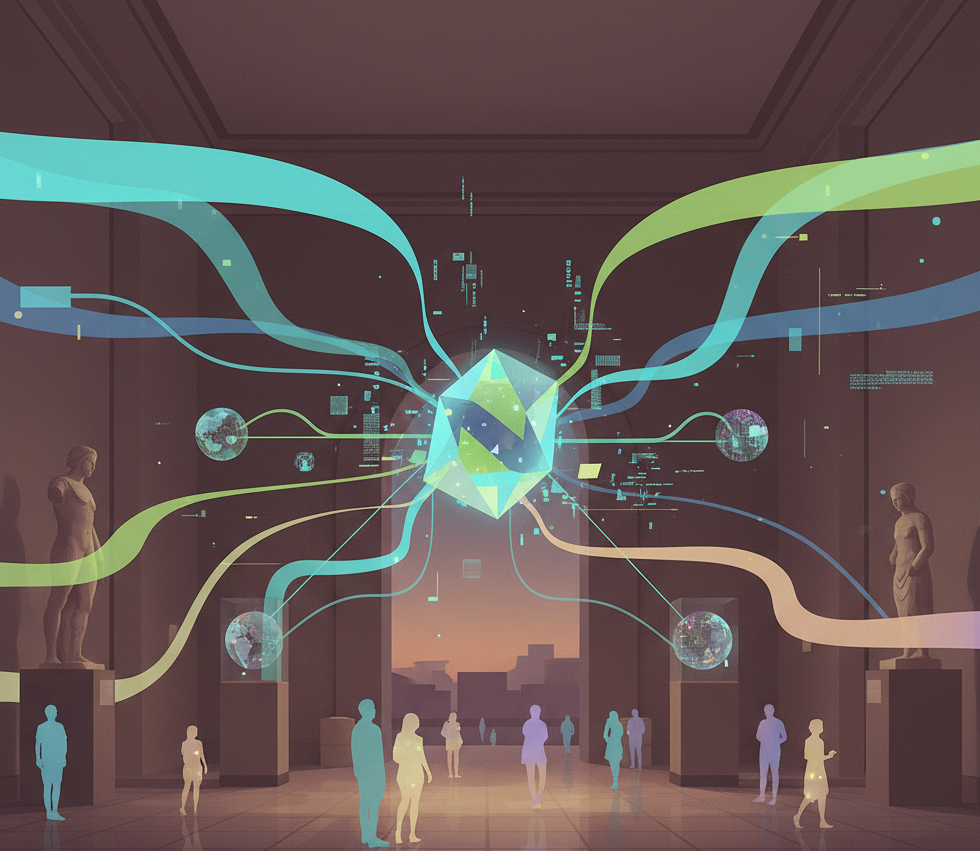
This is where nuseum comes in. Our AI-powered digital museum guide makes the micro-tour utopia realistic and scalable—for institutions of any size.
- Answer spontaneous questions: Visitors can ask their own questions at any time. Responses draw exclusively on the museum’s approved content, ensuring accuracy and alignment with curatorial intent.
- Context in mini-chapters: Instead of long specialist texts, visitors receive short, clear explanations—matched to their interests and prior knowledge.
- Flexible and personalized: ach person chooses whether to skim a topic or dive deeper—just like a great micro-tour would allow, creating a truly personalized museum experience.
- Scalable and sustainable: Unlike additional staffing, the solution scales effortlessly without ongoing costs. It supports museums in their digital transformation, making every exhibition a more accessible museum experience, regardless of size or budget.
In this way, te Heesen’s vision stops being an unreachable dream and becomes a practical concept. nuseum brings the idea of micro-tours into reality—helping museums engage newcomers and experts alike while bridging the knowledge gap at the heart of so many visits.