

Developing an app has long been a resource-intensive task for museums – financially, temporally, and organizationally. Artificial intelligence now enables a completely new approach that removes these barriers – while delivering even better results for visitors.
How much does a museum app usually cost?
Developing a traditional museum app through a software agency typically costs between €50,000 and €200,000. The majority of the expense comes from programming as well as voice actor costs for audio content.
According to a survey by the Museumsbund Österreich, 47% of museums stated that they do not have the necessary resources to implement such a project. At the same time, visitors – especially younger audiences – now expect digital offerings that provide orientation, make content understandable, and seamlessly integrate multilingualism.
Funding for museum digitization – a double-edged sword
In recent years, funding programs have often been the only way to make digitization projects possible at all. They have achieved a lot – but they also bring structural challenges:
- High administrative effort for application, monitoring, and accounting.
- Content requirements that do not always align with the actual needs of visitors.
- Project-based funding that often runs out after the project ends – maintenance and further development are left behind.
The result: Many of these apps are barely used. Our own research shows: About 90% of museum apps are actively used by less than 3% of visitors. Funding has therefore triggered an important first wave of digitization – but it rarely creates sustainable structures.
The question, therefore, is: How can museums operate their digital offerings economically and sustainably?
Artificial intelligence changes the game
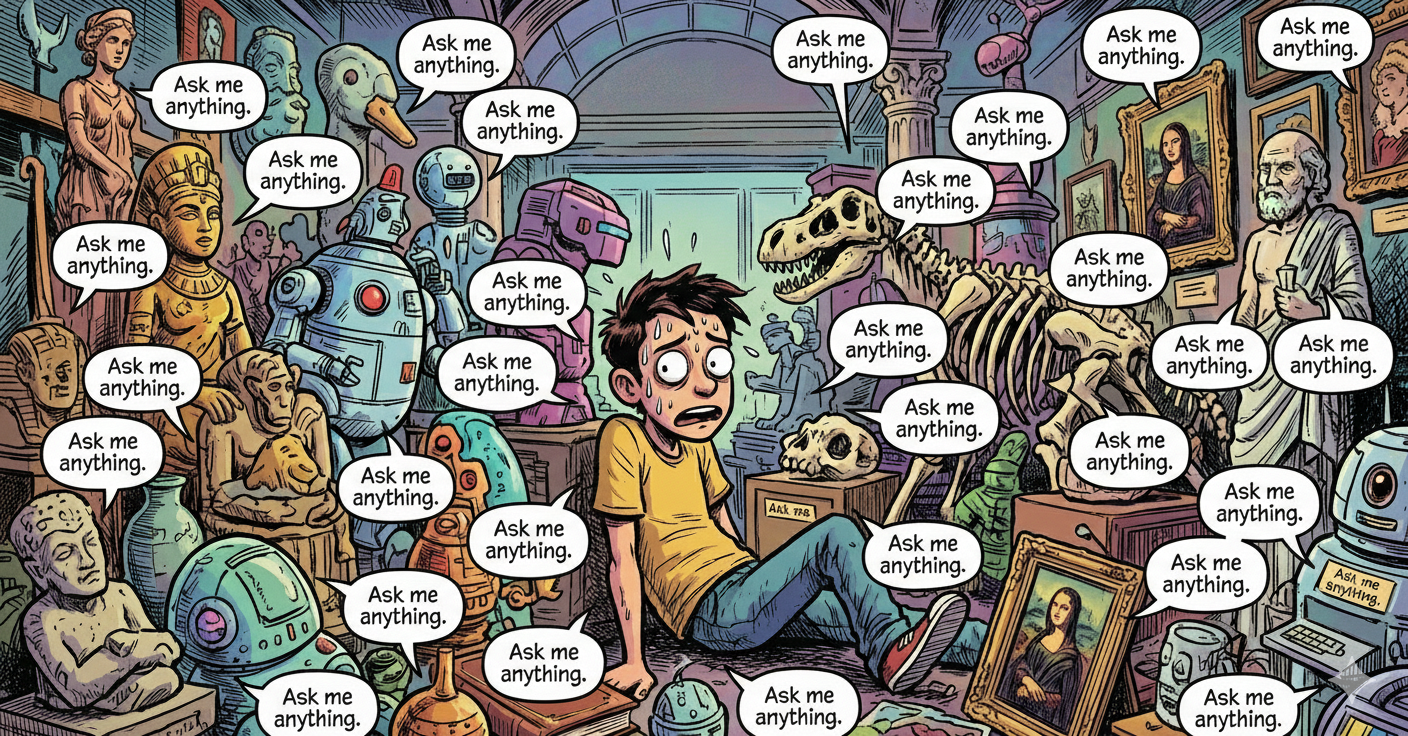
Artificial intelligence has a disruptive impact on the components that previously made museum apps particularly expensive. Content creation, translation, and audio production can now be implemented much more affordably, quickly, and flexibly through AI.
With AI technology, museums can:
- Automatically translate texts into up to 20 languages,
- Generate content with natural AI voices,
- and use text generation and optimization to derive content directly from existing exhibition texts or publications.
This creates in just a few days what used to take months – and without external costs.
Platform solution instead of individual development
Another significant cost factor lies in the development of an individual app. Such native apps are expensive to develop and maintain. As the study linked above shows, nine out of ten native museum apps are barely used. The investment is therefore not worthwhile.
That is why we deliberately rely on a standardized platform solution that combines the advantages of efficiency and user-friendliness: Museums can easily create content in the nuseum Curator Space and immediately publish it via a browser-based web app – no download, no technical barriers.
This principle of standardization and scalability not only reduces costs but also improves the quality and timeliness of digital offerings.
Financing museum apps through visitors
The technological advances mentioned above form the basis for a new financing model that makes digital mediation accessible to all museums.
Our solution is financed exclusively through a revenue share on sold guide accesses: When purchasing tickets, visitors pay a small surcharge for access to our digital guide. This means: No upfront investment for the museum – and at the same time, a sustainable digital offering that pays for itself.
This model has several advantages:
- No budget barriers: Digitization becomes possible for all institutions – regardless of size or funding status.
- Continuous improvement: The mediation team can continuously improve content without external service providers or voice actors.
- Economic added value: The digital guide becomes an additional source of income instead of a cost factor.
- Real benefit for visitors: Interactive, multilingual, and personalized – a digital experience with tangible added value.
Conclusion
Truly effective digital mediation can now be implemented even without large budgets or funding – if the latest technologies such as AI are used correctly.
Without upfront investment or financial risk, even small museums now have the opportunity to offer their own museum app – accessible, multilingual, and future-proof.